


Everyone loves a usable interface that helps you get things done. I should know, I made a career designing them. For a long time, a system's value lived at the point where people interacted with it. If no one could use the software, what was the point?
That's changing. Getting the most out of AI means focusing on what's underneath the interface, the data layer:
- Building user interfaces is getting cheaper by the day.
- Your system's intelligence is only as good as the data feeding it.
- AI agents will do most of the execution.
But that's just the starting point. A solid data foundation creates advantages that build on each other:
- Lower software and license costs.
- Connected data across systems.
- Richer data from more sources.
- Faster time from insight to action.
When AI agents can act on your behalf and spin up interfaces on demand, your data layer becomes the thing that makes everything else work. The organizations that get this right early will have a real edge.
Building interfaces is getting trivially easy
If you haven't seen it yet: creating apps is shockingly fast now. A senior developer using tools like Cursor or Claude Code can build one in a few hours. It might not scale well or be easy to maintain, but it works. Even designers like me now prototype working software as part of the design process.
Interfaces don't need to last. Think of them as disposable. Need to interact with something? Generate a UI, use it, move on.
This already shows up in creation and marketing workflows. Want a new page? Build a page builder. It takes a minute.
Scalability is a different question, and it comes down to data. A throwaway interface doesn't need to scale, but the data layer behind it does. The more reliable and secure your data layer is, the more solid all those disposable interfaces become.
AI is only as good as its data layer.
Large language models like ChatGPT depend entirely on the information you give them. When context is missing, they make things up and hallucinate. That makes them a poor fit for business use. Unless you back them with clean, well-organized data.
Good data makes AI agents, chatbots, personalized experiences, and automation reliable and safe. Without it, none of those things are trustworthy enough to use.
I've seen this firsthand while designing AI agents. Consistently more than 80% of my time has gone into making and improving the data layer, not the actual workflow logic and user interface. The agent itself is almost the easy part. What's hard is making sure it has the right information, structured the right way, so it can do something useful without falling apart. That ratio surprised me early on, but it makes sense. The workflow is just instructions. The data is what the instructions operate on.
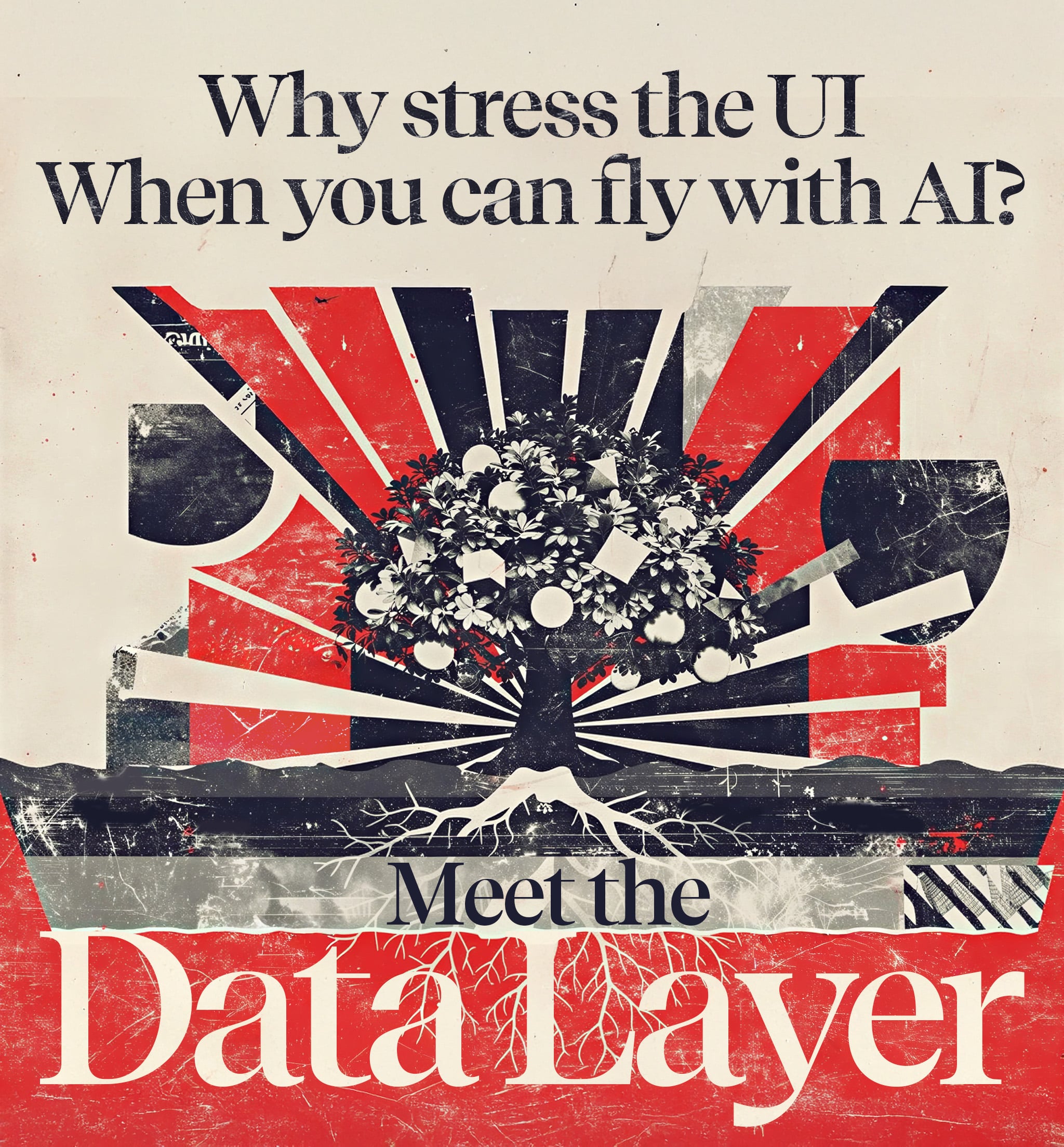
It all starts underground. The deeper your data roots go, the higher your AI can grow.
Agents working with agents is where the productivity gains are
Most automation will happen between AI agents, than between people and screens. Agents take a request, break it into tasks, execute, and track progress. Think of them as users without eyes or hands. They can't click through an interface easily, so they need direct access to the data.
Say you're launching a new product. Today, you'd spend hours
- pulling specs from the PIM
- updating product pages in the CMS and knowledge base
- coordinating approvals with a dozen people.
With agent-to-agent automation, you define the goal and agents handle the rest.
- A content agent drafts the page.
- A support agent updates the knowledge base.
- A personal assistant agent writes the emails and coordinates reviews.
It won't be perfect, but it can cut the tedious work in half.
Giving agents direct access to your tools is what frees people up to focus on priorities and decisions. We're just starting to understand what that makes possible.
Time to rethink your toolkit
Martech stacks grow organically. Someone buys email automation. Another team adds social tools. Most of those tools were picked for their friendly interfaces and easy setup. They were single-purpose tools that were quick to adopt. What made them valuable then is what makes them a problem now.
As building interfaces on demand is approaching zero, and the opportunity cost of not having your own AI agents keeps growing. So the role of legacy martech is changing.
Think of your data layer as the durable, reusable part of your toolkit. Interfaces are the replaceable part. Once you see it that way, you start looking differently at the platforms you've built workflows around for years. Is a given tool doing more for you than storing data and showing it back?
Going forward, the move is toward composable systems with a clear separation between data and UI. Selection criteria like data residency, reverse ETL support, and bring-your-own-cloud will matter more and more.
This doesn't mean ripping everything out. But applications and external systems need to stop being the source of truth. Data gets powerful when it's in one place, separated from the tools that use it.
Bring every silo into one place through shared meaning
Even when data lives in one place, it often speaks different languages. Consider someone who downloads your whitepaper.
- Marketing calls them a lead. When they book a demo,
- Sales creates a prospect,
- Customer Success opens an account.
Same person, three systems and definitions. The data doesn't share meaning, so building a single customer view hits a wall.
The fix is an ontology, a shared set of definitions that spells out what your terms mean and how they relate. Think of it like onboarding a new teammate. You don't hand them database tables and expect them to figure it out. You explain what's what. Even smart people make bad calls without good context.
With an ontology, AI systems can understand how your business works:
- Translate across systems. Finance and ops see the same revenue numbers.
- Query in plain language. Find out why EMEA margins dropped without being a SQL guru.
- Surface related concepts. Search for customer complaints and get support escalations too.
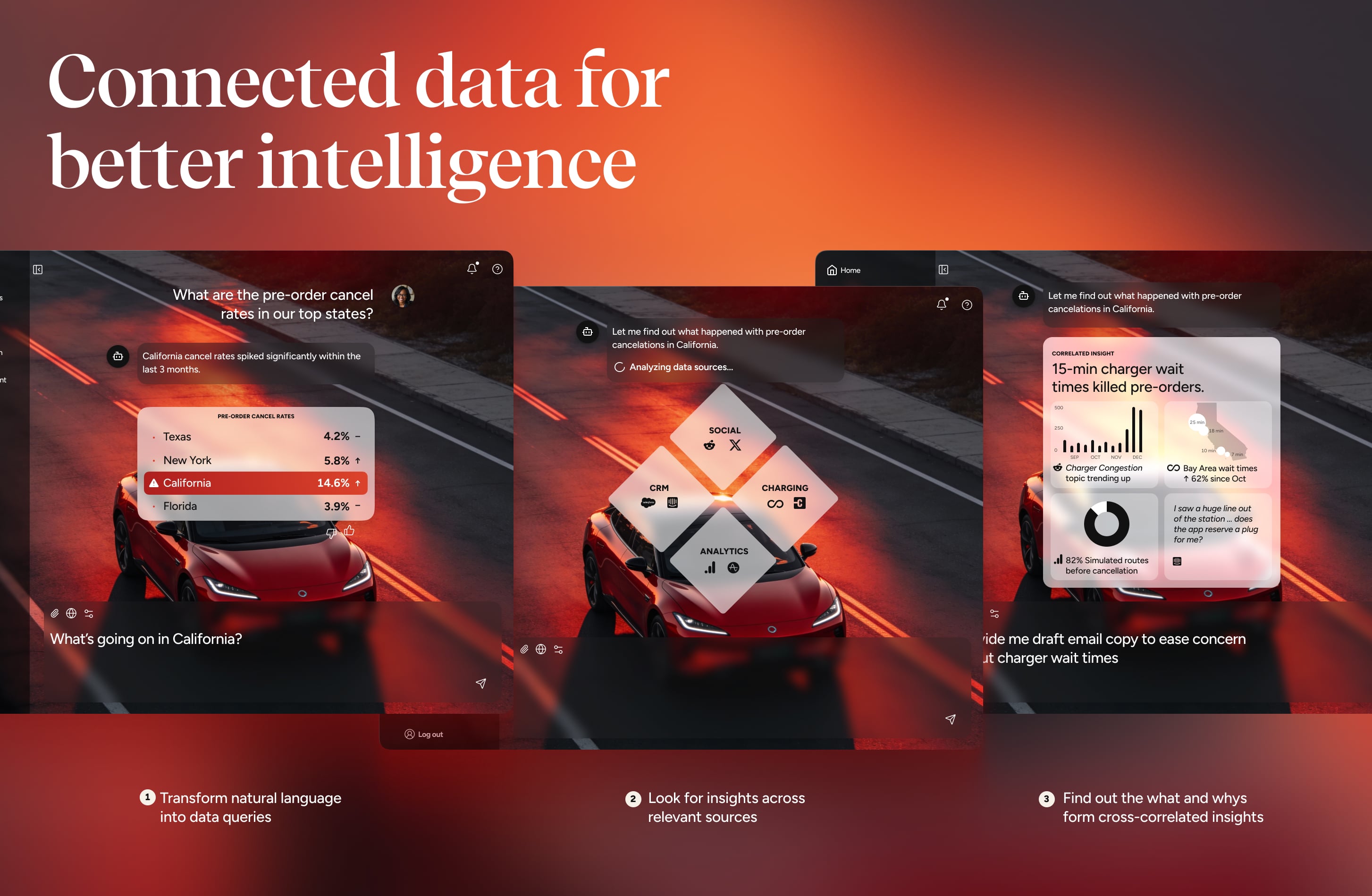
Bringing data together reveals clearer signals. You start to see what relates to what and how. Loose information becomes a coherent picture.
The unstructured data you're sitting on
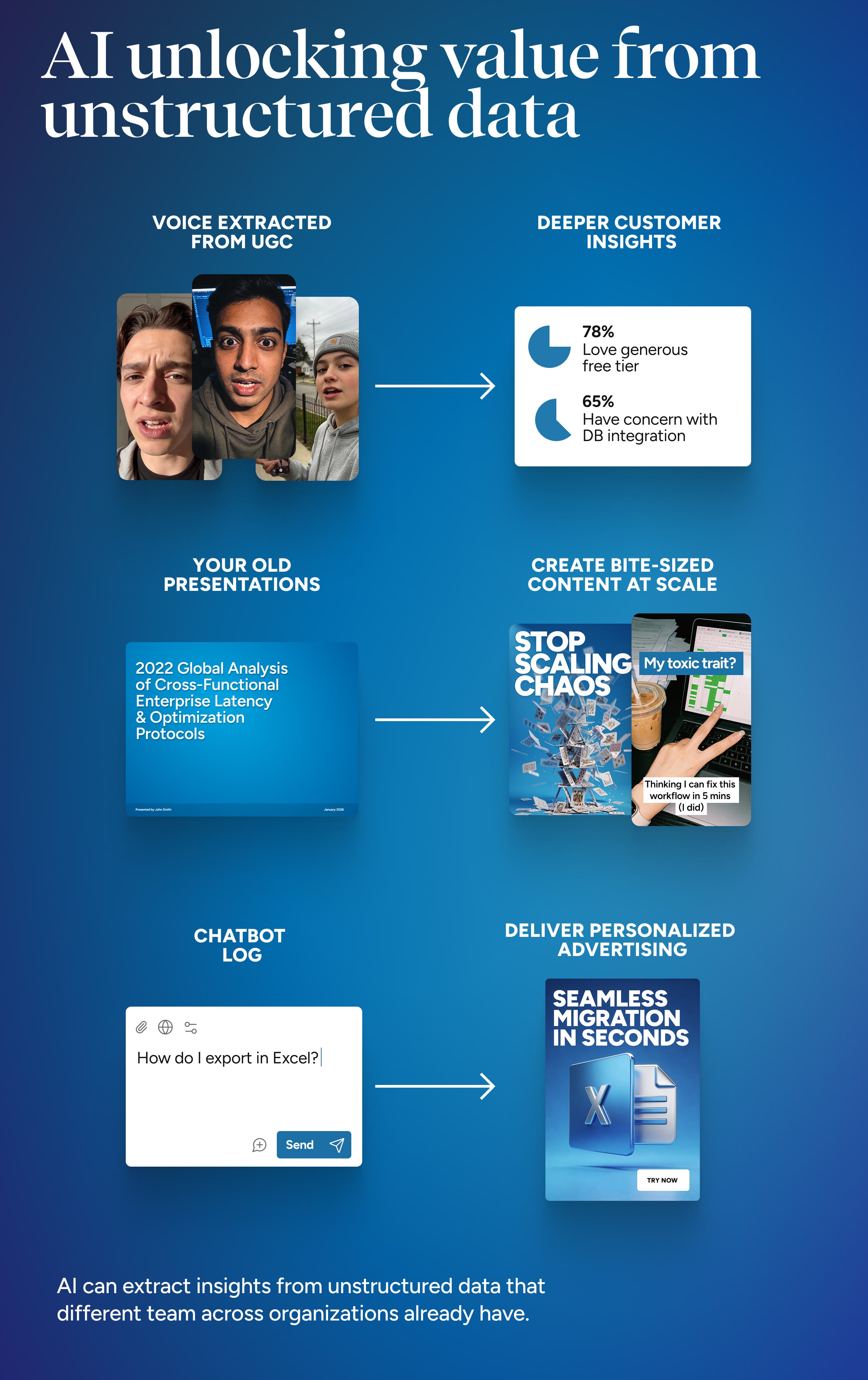
Most marketing analytics focus on structured data (clicks, conversions, revenue, etc.) It’s the bread and butter of analytics as it’s how we measure performance. Most people think of this when they hear "data," but it's only a small slice.
Structured data tells you what happened. It rarely tells you why. The why lives in unstructured data, the messy, hard-to-quantify stuff organizations produce constantly but almost never analyze.
This is the good stuff.
- A customer explaining in their own words why they almost canceled.
- A sales rep describing the objection that keeps coming up.
- A social media thread where your target audience debates your category.
Extracting insight from unstructured data used to be expensive and required large specialized teams. Most organizations gave up on it. The ROI didn't justify the effort.
AI changed that math. Large language models can read, summarize, and find patterns across text at a scale that wasn't realistic two years ago. Tens of thousands of data points that once took months to work through can now be processed in hours.
The real payoff comes when you connect those unstructured sources to your structured data. More data, richer data, means better correlation. Familiar sources become more valuable, and you get a steady stream of insight you couldn't access before.
Super fast decision cycle
How long does it take your organization to go from spotting a problem to doing something about it?
Not small tactical tweaks, I mean the full loop. Finding out something isn't working, understanding why, and fix it.
For most of us, the honest answer is months.
- A dashboard flags a problem.
- Meetings happen.
- Analysts pull data. Researchers dig into causes.
- Decks get built, presented, debated.
- Then you spend weeks pitching for budget approval.
This isn't even a people problem. Smart, capable professionals staff every step. The issue is that the time it takes to turn data into action outlasts the usefulness of the insight.
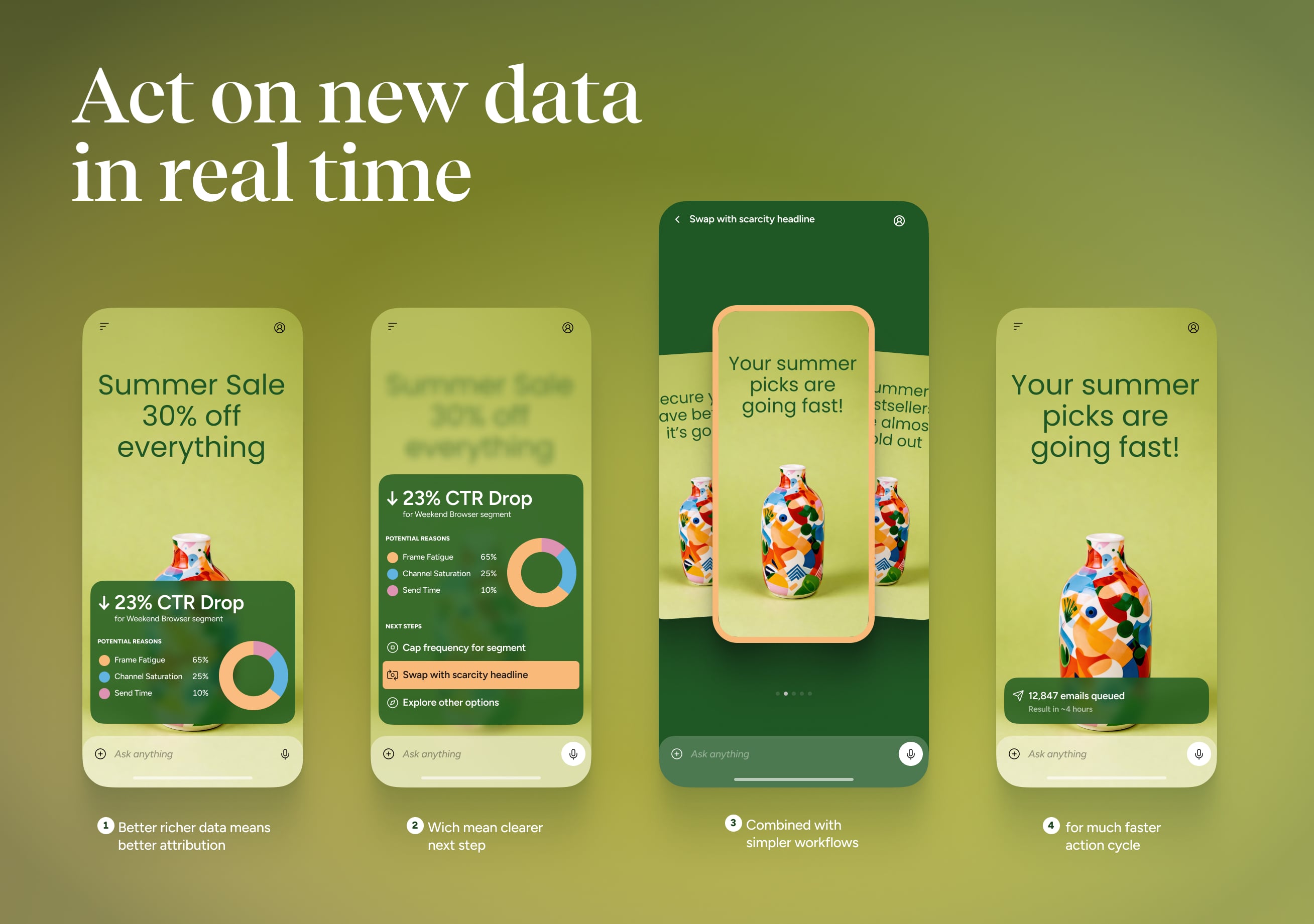
Human judgment matters. The job is clearing away everything that slows it down. Like automating the steps between signal and decision so the right information reaches the right person at the right time, with clear options for what to do next.
This takes connected data, shared definitions, and AI agents that can work across your whole data layer.
But it also takes a mindset shift. The bottleneck is usually approval workflows designed for a world where changes were expensive and hard to reverse. That's not the world we're in anymore. You can test, learn, and iterate in hours. The old safeguards have become the constraint.
Before you know it,
- Steps that used to take a week start taking hours
- What took a quarter takes days
- Each cycle teaches you something
- Each lesson feeds the next decision.
- The gap between knowing and doing shrinks to almost nothing
Conclusion
Value used to live at the surface, and that made sense when interfaces were expensive to build and maintain. That cost is collapsing. Anyone can spin up a throwaway app in minutes. The value is underneath.
AI made this shift inevitable. These systems are only as good as what you feed them. Clean, connected, well-structured data gives you intelligence you can trust. As agents take on more work, they need easy access to the data.
This is why the martech stack everyone built over the years is starting to work against you. Tools chosen for friendly interfaces and quick adoption often lock data in silos. The things that made them easy to buy make them hard to connect. But when you add shared definitions and unlock unstructured data, the potential keeps expanding.
You don't need to tear everything down tomorrow. But it's worth looking at your systems with fresh eyes. What's durable and composable? What strengthens the data layer instead of working against it?
Once you start asking those questions, things click into place. What felt like a tangle of tools and workflows starts to look like raw material for something much better.
Your most valuable asset has been there all along, underneath the surface. It’s time to build on it.
Start with the data layer.