


Everyone agrees that personalization works. The problem is actually doing it.
You need tools on top of tools. Every personalized experience means another setting to maintain. The work multiplies faster than the results. And because personalization is never the most urgent thing on the list, it’s the first thing to get cut when you run out of resources.
So it dies in implementation. Every time.
AI is personalized by default. That’s what makes it different. You start with a one-to-one interaction and add control from there, rather than building a generic experience and trying to add personalization after the fact.
- Instead of adding rules for every audience, you listen to intent and respond. Customers are already telling you what they want; AI gives you the means to act on it.
- Content adaptation gets cheaper and more granular. You’re no longer limited to the five audience segments you had time to build. You can target in ways that used to be absurd and save media costs in the process.
- High-touch service becomes possible in places where it never made economic sense before. Every customer can get the attention that keeps them coming back without breaking the bank.
Put it together, and you get individual experiences that are easier to maintain, cheaper to reach, and more valuable to the people on the other end.
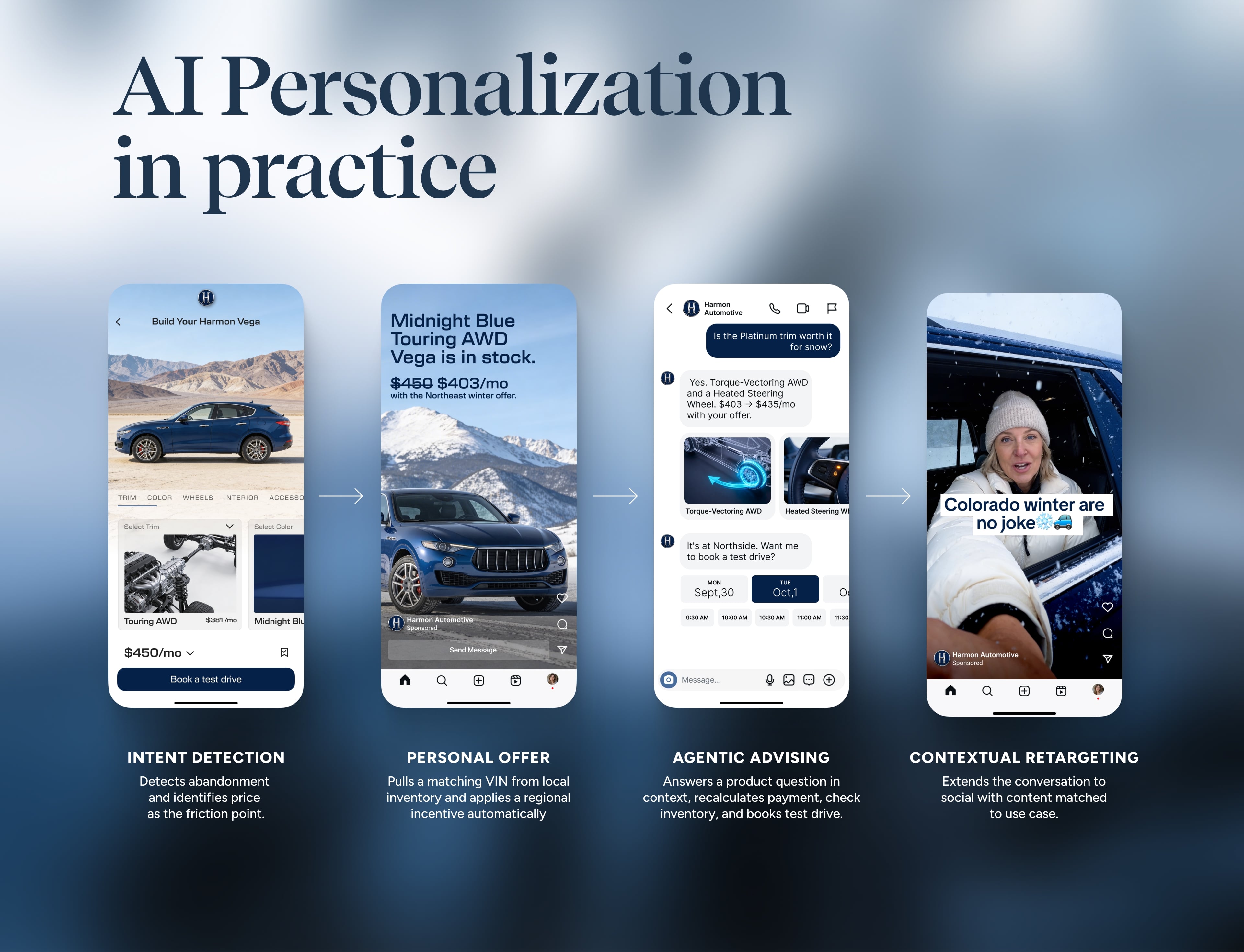
Focus on what matters from what people tell you
The way people interact with the web is changing. Instead of browsing around a site trying to find what they need, people state what they want and expect the other end to figure it out. You stop guiding people through your structure and start responding to theirs.
Customers have always been telling you what they want. Every search query, social interaction, and page visit is someone showing you what they need. We just didn’t have the means to act on it. Better data analysis and conversational interfaces make it possible to understand what someone wants at any given moment and do something about it.
And the right response is obvious. Someone comparing specs needs comparison tools. Someone reading installation guides is probably ready to schedule. You don't need a black-box algorithm to figure out what comes next. The intent itself tells you.
This is also how AI search works. Engines like ChatGPT take the path of least resistance when pulling together answers. Someone looking for the best TV for watching sports gets pointed to a comparison page for sports TVs, not to a manufacturer’s site where an agent would have to dig through specs. Content built around specific intent gets picked up first. It also converts better because it answers the actual question someone is asking.
Building around what customers want stops you from making things no one asked for. You answer the question being asked and nothing else. You show up where those conversations are already happening. And you respond when someone is ready to act.
Smaller audiences for bigger impact
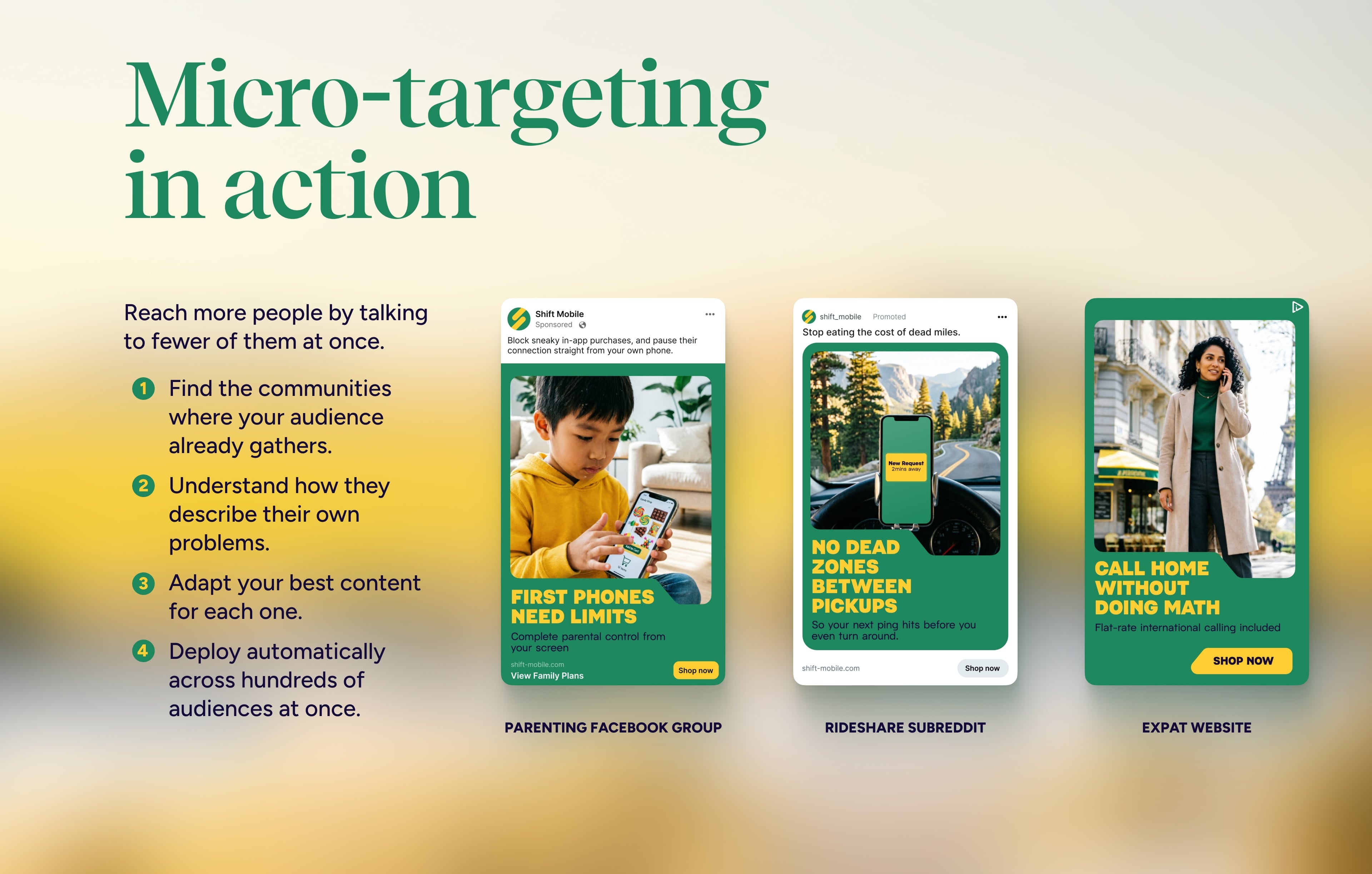
Reaching the right people with the right message has always been the promise of digital marketing, but in practice, it has been too expensive. AI enables a small team to manage hundreds, if not thousands, of audiences at once, for three reasons:
- Better listening. AI can make sense of places that were previously too noisy to follow, like forums or review sites. Teams can find specific audiences based on how people describe their own problems.
- Cheaper adaptation. AI is better at adapting than creating from scratch. Give it something good, and it can reshape it for a different audience or channel. With the same core idea, adapted to each situation.
- Less manual work. Setting up and managing all those variations used to be the bottleneck. Automated workflows handle repetitive tasks such as scheduling, targeting, adjusting spend, and managing results.
This adds up to real savings. Broad campaigns spend most of their budget on people who were never going to care. When you know who you're talking to, you spend less, reach fewer people who are more likely to act, and get better conversion for it.
High touch service at scale
A lot of digital experiences are obnoxious. We just learned to tolerate them.
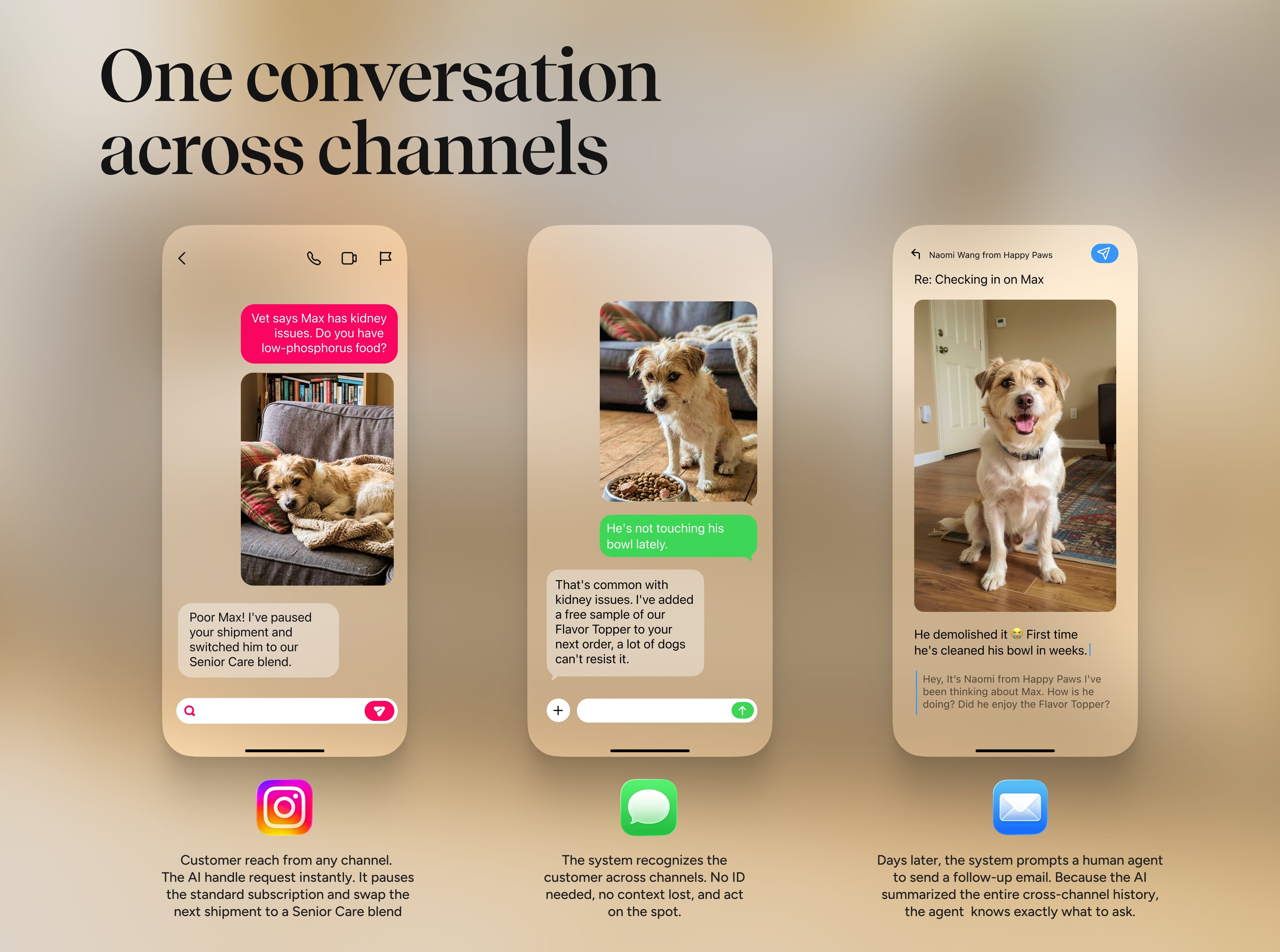
The forms, the repeating ourselves, the having to learn a company's org chart just to find what you want. The bar is so low. People want to handle things the way they do with other people: start in one place, pick it up somewhere else, and not repeat themselves.
ChatGPT changed everyone’s expectations. Users are flocking to search bars and chatbots, using them more often and with more specificity than before. The era of contorting our minds to make machines listen is winding down. Today, we demand a conversation.
For that to work, context needs to persist across channels. Whatever a customer has said or done — in chat, on the phone, in-store — should be available everywhere else. No one has to repeat themselves, and whoever picks up the conversation is ready to help.
And any task should be able to work through any channel. If you can do it on the phone, you can do it in chat, in-store, or on the app. You pick the channel that’s most convenient. They all work the same.
Together, they make customers listened to, and cared for. A better experience at the same cost, which leads to deeper loyalty.
This extends to how customers will increasingly interact: through their own AI assistants. People will use personal agents to research, compare, purchase, and troubleshoot. Your brand needs to be legible to those agents with structured content they can parse, and APIs that let agents talk to each other. Preparing for this now means you’re ready to meet customers wherever their AI takes them.
Conclusion
Personalization always died under its own weight because every variation added cost, and the returns never kept pace. So it got simplified, deprioritized, and eventually abandoned.
Now you can listen at scale, adapt content for audiences you never had time to build, and maintain context across channels so customers feel heard and cared for. The experiences become more relevant and more responsive while costing less to run.
Companies that build around individual intent rather than adding personalization onto existing experiences will find it’s finally sustainable. Not because the idea is new, but because doing it well got cheaper, easier, and better all at once.